14 Day Namibia, Botswana & Zambia Birding Tour
DESTINATION
Namibia Botswana Zambia
DURATION
14 Days
GROUP SIZE
From 2 people
AVAILABILITY
4th - 17th January
TOUR PRICE
From USD $9,775 PP
Make enquiry
Tour Introduction
Namibia, Botswana and Zambia combine exceptional birding with varied scenery and rewarding wildlife viewing. This 14-day journey begins on Namibia’s Atlantic coast at Walvis Bay, travels through the Erongo Mountains and Damaraland, crosses Etosha National Park from west to east and then follows the broadleaf woodlands and river systems of the Kavango, Okavango and Zambezi. The tour ends in Livingstone with Victoria Falls and a cruise on the Zambezi River.
Habitats range from coastal lagoon, salt pans and Namib dunes to granite hills, arid plains, mopane woodland, savanna, riparian forest, papyrus swamp and seasonal floodplain. This diversity gives us opportunities to find many of the region’s endemic, near-endemic and localised birds, together with an excellent selection of mammals.
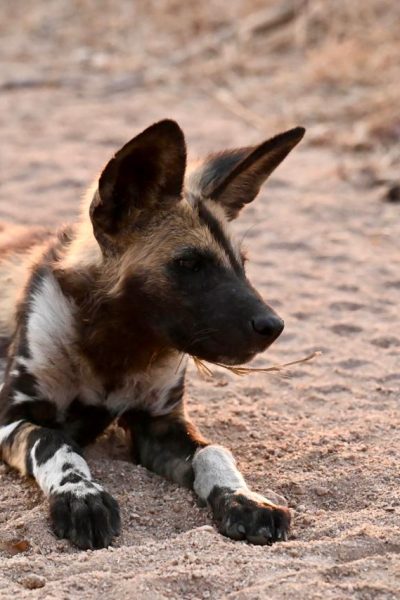
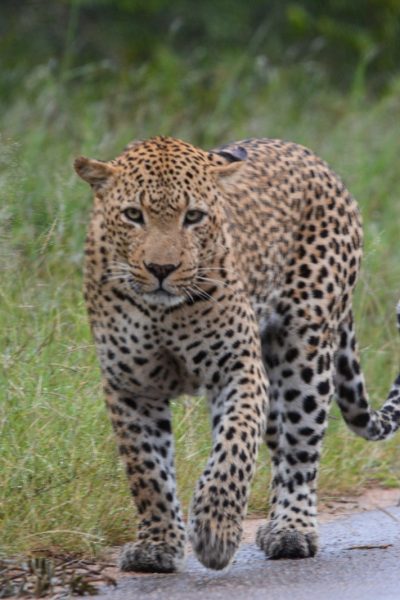
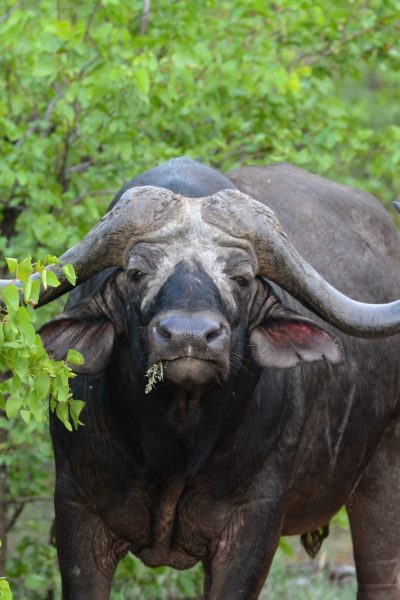
Tour highlights
- Walvis Bay Lagoon and the Namib dune belt
- The Erongo Mountains and Damaraland
- Etosha National Park from the western sector to the eastern gate
- The Kavango and Caprivi broadleaf woodlands
- The Okavango Panhandle and floodplains
- The Zambezi River and Victoria Falls
Selected target birds
- Pel’s Fishing Owl, Western Banded Snake Eagle and White-backed Night Heron
- Slaty Egret, Wattled Crane and African Skimmer
- Damara Tern, Dune Lark and Benguela Long-billed Lark
- Rockrunner, Hartlaub’s Spurfowl and Herero Chat
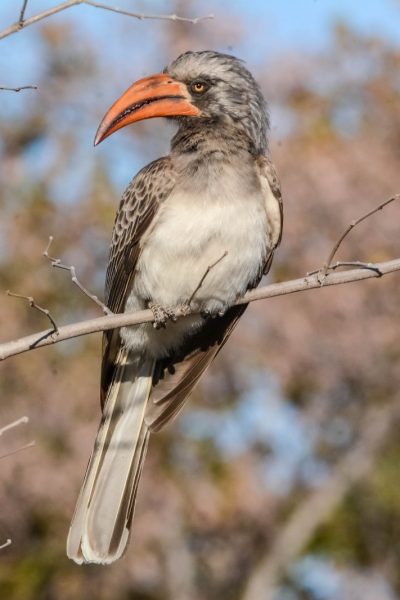
- Bradfield’s, Monteiro’s and Damara Red-billed Hornbills
Safari Itinerary
Our Namibia, Botswana and Zambia birding tour begins in Walvis Bay on Namibia’s Atlantic coast. After meeting at Walvis Bay International Airport, we transfer to our accommodation and settle in.
Depending on the arrival time, we will begin our birding at the famous Walvis Bay Lagoon. This Ramsar-listed wetland is one of southern Africa’s most important coastal birding sites and regularly supports large numbers of flamingos, pelicans, cormorants, terns and migratory shorebirds. Damara Tern will be an important target, while the lagoon and nearby salt works can also produce an excellent variety of plovers, sandpipers, godwits, gulls and other waterbirds.
This evening we enjoy a welcome dinner and discuss the route and target species for the days ahead.
We start early in the Namib dune belt south of Walvis Bay, where our main target is Dune Lark, Namibia’s only true endemic bird. We will search the sparsely vegetated dune valleys and the Kuiseb riverbed, also watching for species such as Tractrac Chat, Bokmakierie, Grey-backed Cisticola, Dusky Sunbird and Pale Chanting Goshawk.
After our morning birding, we travel inland to the Erongo Mountains. The granite hills and valleys surrounding our lodge are particularly rewarding for Namibian specials. During the afternoon we will look for Hartlaub’s Spurfowl, Rockrunner, Rüppell’s Parrot, Carp’s Tit, White-tailed Shrike, Rosy-faced Lovebird, Violet Wood Hoopoe and both Monteiro’s and Damara Red-billed Hornbills.
After dinner we may listen and look for nocturnal species around the lodge, including Freckled Nightjar and Western Barn Owl.
We have another opportunity this morning to search the Erongo slopes and lodge grounds for any species missed the previous afternoon. The rocky habitat can also produce Short-toed Rock Thrush, Mountain Wheatear, Pririt Batis, Pale-winged Starling, African Hawk-Eagle and several colourful waxbills and buntings.
We then continue north into Damaraland, a dramatic region of rugged mountains, dry riverbeds, open plains and granite outcrops. Our destination is the Brandberg area, dominated by Namibia’s highest mountain.
Birding on the surrounding plains and rocky slopes may produce Rüppell’s Korhaan, Burchell’s Courser, Benguela Long-billed Lark, Herero Chat, Yellow-bellied Eremomela, Cape Penduline Tit and Grey-backed Cisticola. Around the dry Ugab River and lodge grounds we will also search for Bare-cheeked Babbler, Violet Wood Hoopoe and Rüppell’s Parrot.
We begin with an early birding session around the Brandberg, concentrating on any remaining Damaraland targets. We then travel towards Etosha National Park and enter the park from the west.
Etosha is one of Africa’s best-known wildlife reserves, centred on the immense pale salt pan from which the park takes its name. Its waterholes, open plains, mopane woodland and thornveld support more than 350 bird species and a remarkable variety of mammals.
As we begin exploring the western sector, we will watch for Common Ostrich, Kori Bustard, Northern Black Korhaan, Red-crested Korhaan, Double-banded Courser, Namaqua and Double-banded Sandgrouse, Pygmy Falcon and a range of larks and raptors. The waterholes may attract African Elephant, Black Rhinoceros, Lion, Giraffe, Gemsbok, Greater Kudu, Springbok and Common Warthog.
Today we continue to explore the southern sector. Much of the day will be spent moving slowly between waterholes, stopping whenever bird or mammal activity warrants a closer look.
The open country is well suited to larks, coursers, korhaans and raptors. We will scan Sociable Weaver colonies for Pygmy Falcon and watch for Spike-heeled, Pink-billed, Red-capped and Sabota Larks, Chestnut-backed and Grey-backed Sparrow-Larks, Rufous-eared Warbler and Ant-eating Chat.
We will arrive back at camp later in the day. After dinner there may be time to visit a floodlit waterhole, where Black Rhinoceros and other mammals are possible, together with nocturnal birds such as Verreaux’s Eagle-Owl, Western Barn Owl and Rufous-cheeked Nightjar.
After breakfast we travel eastwards through Etosha, continuing to visit productive waterholes and birding areas along the way. The park’s changing habitats provide regular opportunities for new species and excellent wildlife photography.
We will stop in the central area of the park, where the camp grounds and surrounding woodland can produce Violet Wood Hoopoe, Carp’s Tit, Bare-cheeked Babbler, Damara Red-billed Hornbill, White-crested Helmetshrike, Greater Blue-eared Starling and African Scops Owl.
Etosha is also one of the region’s best places for vultures. We will watch for Lappet-faced, White-backed, White-headed and Hooded Vultures, as well as Martial Eagle, Tawny Eagle, Bateleur, Brown Snake Eagle and a variety of falcons and goshawks.
We dedicate the day to the eastern and east-central parts of Etosha. Depending on conditions, we may take a packed breakfast into the park and spend extended periods at selected waterholes.
Birds to look for include Monotonous and Rufous-naped Larks, Red-billed Buffalo Weaver, Burnt-necked Eremomela, Violet-eared Waxbill, Blue Crane, Black-faced Babbler, Swainson’s Spurfowl, Double-banded Courser and Chat Flycatcher. Raptors may include Martial and Tawny Eagles, Bateleur, Black-chested Snake Eagle, Lanner Falcon, Red-necked Falcon and Gabar Goshawk.
When the Etosha Pan holds water, the eastern section can attract large numbers of flamingos, pelicans, avocets, stilts, plovers, ducks and grebes. We leave the park through the eastern gate and spend the night nearby.
Today we leave Etosha and travel northeast through Tsumeb and Grootfontein towards the Kavango region. This is a longer travelling day, but we will make birding stops whenever time and conditions allow.
The broadleaf woodland between Rundu and Divundu offers the chance to find species more typical of the woodlands farther north. Important targets include Racket-tailed Roller, Rufous-bellied Tit, Souza’s Shrike, Green-backed Honeybird and African Hobby. Sharp-tailed Starling is much more difficult but remains a notable possibility in suitable habitat.
Our accommodation is situated near the river, where the grounds may produce African Fish Eagle, African Openbill, African Darter, Goliath Heron, African Jacana, Pied and Malachite Kingfishers and a variety of storks, ibises and waterbirds.
After some early birding we continue east and then turn south into Botswana, travelling to the Okavango Panhandle. The upper Okavango is lined with riparian forest, reedbeds, papyrus swamp and seasonally flooded grassland, creating one of the richest birding areas on the tour.
Pel’s Fishing Owl is one of the main targets. We will also search for Western Banded Snake Eagle, White-backed Night Heron, African and Lesser Jacanas, Allen’s Gallinule, Little Bittern, Luapula and Chirping Cisticolas, Greater Swamp Warbler and Coppery-tailed Coucal.
The lodge grounds and surrounding forest may hold Swamp Boubou, Hartlaub’s Babbler, Brown Firefinch, Yellow-fronted Tinkerbird, Grey-headed Bushshrike, Narina Trogon and several woodpeckers. A guided walk and boat excursion will allow us to explore both the forest and river habitats.
We have another opportunity for early birding in the Okavango Panhandle before returning north across the border into Namibia. We then explore the Okavango River floodplain and the Mahangu section of Bwabwata National Park.
This compact reserve supports an exceptional variety of birds and mammals. Key birding targets include Wattled Crane, Slaty Egret, Long-toed Lapwing, Collared Pratincole, Brown-necked Parrot, African Cuckoo-Hawk, Ayres’s Hawk-Eagle, Broad-billed Roller and a selection of smaller raptors.
The floodplain is also excellent for general wildlife viewing. We will look for Sable and Roan Antelopes, Tsessebe, African Elephant, African Buffalo, Hippopotamus, Red Lechwe, Greater Kudu and Impala. Depending on the day’s programme and river conditions, we may include a boat cruise or additional riverbank birding.
We begin with a pre-breakfast birding walk around the lodge, where species may include African Green Pigeon, Meves’s Starling, Brown Firefinch, Woodland Kingfisher, Thick-billed Weaver, Swamp Boubou, Meyer’s Parrot and Southern Yellow White-eye.
We then travel east along the Caprivi Strip towards Katima Mulilo and the Zambezi region. Roadside stops and woodland birding may produce Arnot’s Chat, Bennett’s Woodpecker, Meves’s Starling and Southern Ground Hornbill. Subject to time and logistics, a visit to the Muchile Important Bird Area may be considered for the localised Black-cheeked Lovebird.
Our lodge is set in riverine habitat near the Zambezi. Schalow’s Turaco is a notable target around the grounds, while the surrounding woodland and backwaters support a broad variety of riverine and mopane species.
After an early coffee and some final birding along the river, we depart for Zambia, the third country of the tour. We cross the border and continue to Livingstone, with the route expected to take us across the Kazungula Bridge.
Our accommodation is situated near the Zambezi River. Once settled, we will explore the lodge grounds and riverine woodland, looking for Collared Palm Thrush, Red-faced Cisticola, Yellow-breasted Apalis, Orange-breasted Bushshrike, Southern Yellow White-eye, Brown-hooded Kingfisher, Bearded Scrub Robin, Holub’s Golden Weaver and Arrow-marked Babbler.
The area is also productive for cuckoos, including African Emerald, Jacobin, Red-chested, Levaillant’s, Klaas’s and Diederik Cuckoos.
This morning we visit Victoria Falls, known locally as Mosi-oa-Tunya, “The Smoke that Thunders”. We will spend time appreciating the falls and birding the riverine woodland and footpaths in the surrounding national park.
Potential species include Schalow’s Turaco, Trumpeter Hornbill, White-browed Robin-Chat, Terrestrial Brownbul, Yellow-bellied Greenbul, Red-winged Starling, Rock Martin, Rock Pratincole and Northern Grey-headed Sparrow.
In the afternoon we enjoy a cruise on the Zambezi River. From the boat we will watch for African Finfoot, White-backed Night Heron, Western Banded Snake Eagle, Dickinson’s Kestrel and Half-collared, Malachite, Pied and Giant Kingfishers. African Skimmer is another possibility. Nile Crocodile and Hippopotamus are regularly seen along the river.
We return to our accommodation for a farewell dinner and our final night of the tour.
We enjoy a final breakfast overlooking the Zambezi. Depending on the departure time, there may be an opportunity for a short birding walk or to search for one or two final species.
We then transfer to Harry Mwanga Nkumbula International Airport in Livingstone for onward flights. This marks the end of our Namibia, Botswana and Zambia birding tour.